


Mayoral candidates set out their priorities for women and girls at GM4Women2028 hustings

Updated: Jul 23
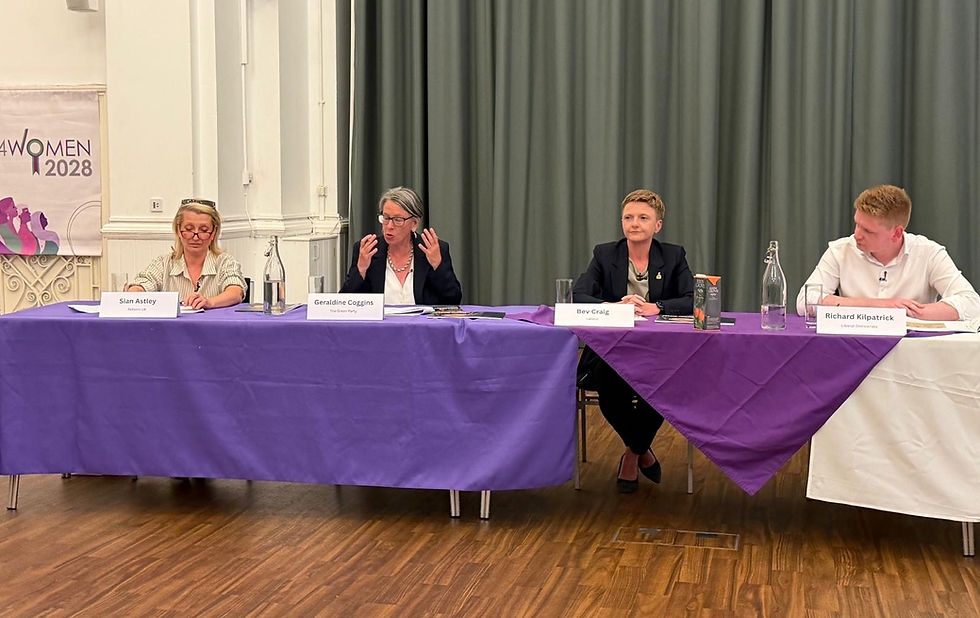
Candidates seeking to become Greater Manchester's next Mayor gathered at the University of Salford on 15th July for a special GM4Women2028 hustings focused on the issues affecting women and girls across the region.
Hosted in Peel Hall on the 168th birthday of Emmeline Pankhurst, the event brought together residents, campaigners, academics and community organisations from across Greater Manchester to hear how candidates would address some of the key challenges identified by GM4Women2028.
Questions posed in advance by attendees and synthesised by GM4Women2028's thematic leads focused on five priority areas: employment, safety, participation, education, and culture and active lives.
Candidates taking part were:
Sian Astley (Reform UK)
Geraldine Coggins (The Green Party)
Bev Craig (Labour)
Richard Kilpatrick (Liberal Democrats)
While there were clear differences in policy and approach, several themes emerged, including the importance of tackling violence against women and girls, improving economic opportunities, increasing representation and ensuring that investment reaches communities across all ten boroughs.
Employment and economic opportunity
Candidates were asked how they would ensure economic growth delivers opportunities for women through employment, entrepreneurship and skills development.
Astley: Greater focus on spreading investment beyond the city centre, supporting women-led businesses, creating local enterprise hubs and building stronger networks for women entrepreneurs.
Coggins: Addressing the disproportionate economic pressures facing women, including unpaid caring responsibilities, while rebalancing investment across Greater Manchester's boroughs.
Craig: Expanding skills provision, improving transparency around gender pay gaps, supporting social enterprise and ensuring more women benefit directly from economic growth.
Kilpatrick: Greater accountability around pay inequality, strengthening vocational routes for women and ensuring women play a central role in Greater Manchester's future technical workforce.
Preventing violence against women and girls
Safety was one of the strongest themes of the evening, with all candidates outlining measures to prevent violence and improve support for survivors.
Astley: Stronger policing, improved support for domestic abuse survivors and greater accountability from public authorities.
Coggins: Increased investment in violence reduction, prevention programmes and education for boys and young men.
Craig: Better funding for refuges, stronger support services, earlier education around consent and positive masculinity initiatives.
Kilpatrick: Greater representation of women within policing and justice systems, improved support for vulnerable women and a stronger challenge to toxic masculinity.
Encouraging participation and representation
Candidates were also asked how they would encourage more women, young people and underrepresented groups to engage in politics and public life.
Astley: Creating a more respectful political culture where people feel safe expressing different views.
Coggins: Greater use of citizens' assemblies, more diverse representation and stronger support for women entering politics.
Craig: Expanding leadership programmes, community participation initiatives and opportunities for women from all backgrounds to influence decision making.
Kilpatrick: Tackling political toxicity, removing barriers to participation and placing young people's voices at the centre of policymaking.
Expanding education and vocational pathways
Discussion then turned to opportunities for young women who choose routes other than university.
Astley: Closer links between employers, apprenticeships, Live Well Centres and skills provision, with a stronger focus on employment outcomes.
Coggins: Encouraging girls into underrepresented sectors such as construction and technology, alongside a proposed youth jobs guarantee.
Craig: Earlier intervention through schools, improved careers support, investment in early years and expanded work placement opportunities.
Kilpatrick: Tackling childcare barriers, strengthening apprenticeships and increasing access to vocational opportunities.
Culture, creativity and active lives
Candidates were asked how cultural investment could better support working-class women and creative careers.
Astley: Supporting local venues and ensuring cultural opportunities are distributed more evenly across Greater Manchester.
Coggins: Reviewing Greater Manchester's cultural strategy and addressing unequal access to cultural opportunities between boroughs.
Craig: Protecting cultural funding, supporting local venues and enabling communities to shape the use of local cultural spaces.
Kilpatrick: Creating community hubs and recognising creativity as both a cultural and economic asset.
Tackling violence by known perpetrators
A second safety question focused on the fact that most violence against women is committed by someone known to the victim.
Astley: Greater transparency around data, publishing evidence and designing responses based on local intelligence.
Coggins: Addressing the economic factors that can trap women in abusive situations, while co-designing solutions with survivors.
Craig: More funding for specialist support services, trauma-informed public services and faster access to justice.
Kilpatrick: Better coordination between local authorities to ensure women can access safe accommodation and practical support when escaping abuse.
Looking ahead
Closing the event, GM4Women2028 Co-Chair Nadia Ali emphasised the importance of ensuring policies reflect the lived experiences of women from diverse backgrounds, including disabled women, women of colour and survivors of abuse.
GM4Women2028’s Convenor Helen Pankhurst reflected on the origins of the charity, which began following a public challenge to then newly elected Mayor Andy Burnham to make Greater Manchester the best place for women and girls. She reminded attendees that the challenge remains as relevant today as it was in 2018.
The hustings demonstrated both the breadth of issues affecting women and girls across Greater Manchester and the differing approaches candidates would take in addressing them. With just two years remaining of GM4Women2028's ten-year campaign, the discussion reinforced the importance of keeping gender equality at the heart of future priorities.



Comments